Artificial Intelligence (AI) is changing the way companies hire employees. From screening resumes to matching candidates with job requirements, AI is making recruitment faster and easier.
But an important question remains: Can AI make better hiring decisions than humans?
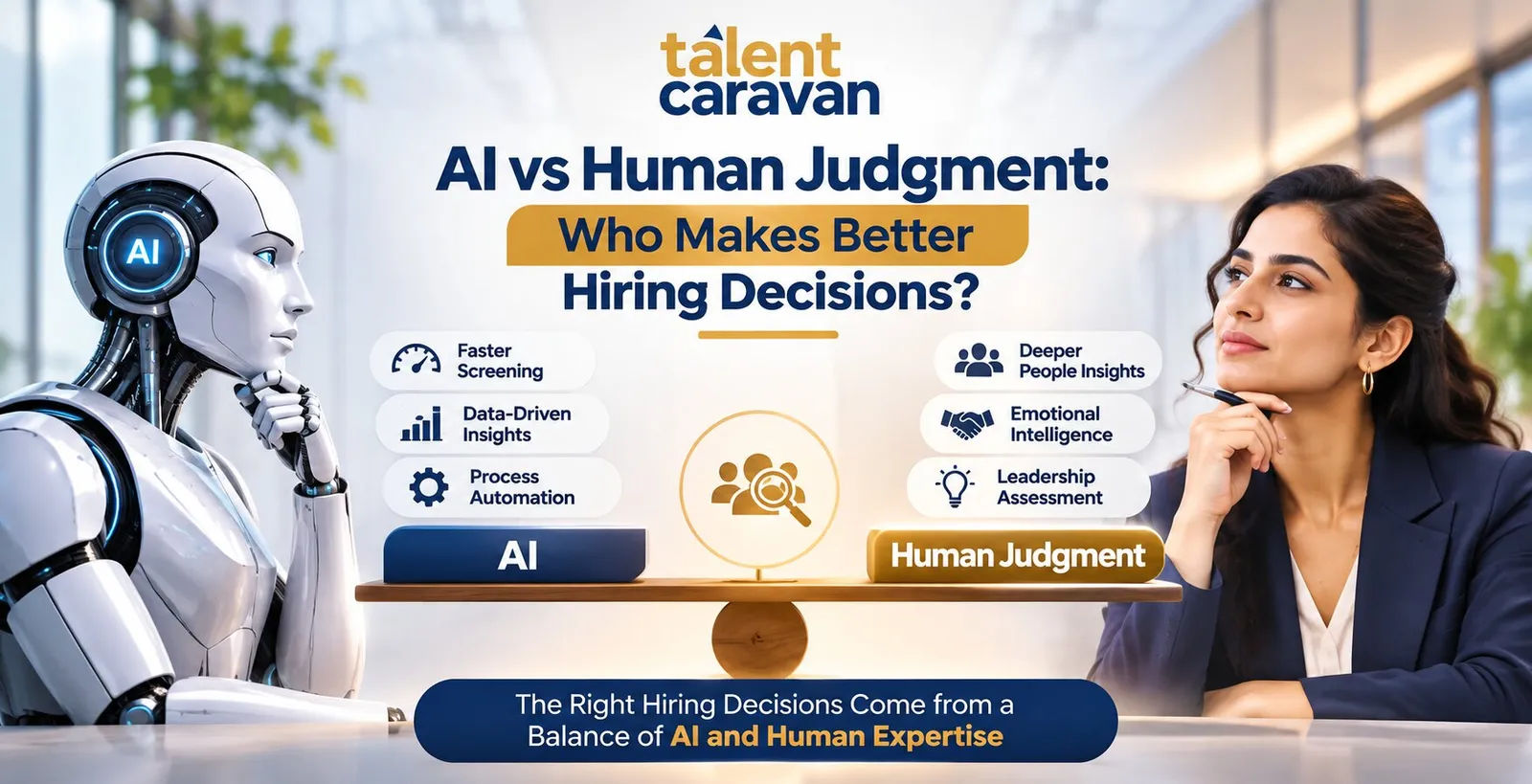
While AI can process large amounts of information quickly, human recruiters bring experience, emotional intelligence, and personal understanding to the hiring process.
The future of recruitment may not be about choosing between AI and humans. It may be about combining the strengths of both.
How Is AI Changing the Recruitment Process?
AI-powered recruitment tools help companies manage different hiring activities.
These tools can analyze resumes, identify relevant skills, compare candidate qualifications, and automate routine tasks.
For example, when a company receives hundreds of applications for one position, AI can help recruiters identify candidates who match the required skills and experience.
This saves time and allows HR professionals to focus on interviews, candidate relationships, and hiring decisions.
However, AI tools are not always accurate. Their results depend on the quality of the information and systems used.
1. AI Makes Recruitment Faster
- One of the biggest advantages of AI in recruitment is speed.
- AI can review large numbers of applications much faster than a person.
- It can also help recruiters organize candidate information, schedule interviews, and identify skill matches.
- This is especially useful for companies managing multiple vacancies.
- AI helps recruiters save time, but speed alone does not guarantee the right hire.
2. Human Recruiters Understand People Better
- Recruitment is not only about matching skills with job descriptions.
- It also involves understanding a candidate's motivation, communication skills, career goals, and leadership potential.
- Human recruiters can ask follow-up questions, understand personal experiences, and evaluate how candidates respond to different situations.
For example, a candidate may not have every skill listed in a job description but may demonstrate strong learning ability and leadership potential.
A skilled recruiter can recognize these qualities through meaningful conversations.
3. AI Can Support Data-Driven Hiring
- AI recruitment tools can help organizations compare candidate information using defined requirements.
- They may identify patterns, highlight relevant experience, and support more consistent screening.
- However, AI can also produce unfair results if it uses biased historical data or unsuitable evaluation methods.
- This is why companies should regularly review their AI recruitment systems.
- Technology should support fair hiring decisions, not replace human responsibility.
4. Human Judgment Brings Emotional Intelligence
- Emotional intelligence plays an important role in recruitment.
- Experienced recruiters can understand how candidates communicate, handle challenges, and approach workplace situations.
- These qualities are especially important when hiring managers, senior executives, and business leaders.
For example, a leadership candidate may have excellent qualifications but struggle to explain how they manage teams or resolve conflicts.
Human interviews can explore these areas more deeply.
5. AI Cannot Fully Understand Every Career Journey
- Not every successful professional follows a traditional career path.
- Some candidates change industries, take career breaks, or develop valuable skills through practical experience.
- AI systems may overlook suitable candidates if their screening rules are too strict.
- Human recruiters can consider the reasons behind career changes and evaluate transferable skills.
- This creates opportunities to identify talent beyond standard resume requirements.
6. The Best Hiring Strategy Combines AI and Human Expertise
Instead of asking whether AI or humans are better, organizations should focus on how both can work together.
AI can support:
- Resume screening and candidate matching.
- Recruitment data analysis.
- Interview scheduling and communication.
- Identifying relevant skills and experience.
Human recruiters can focus on:
- Understanding candidate motivation.
- Conducting meaningful interviews.
- Evaluating leadership and communication skills.
- Building candidate relationships.
- Making informed final hiring decisions.
Together, AI and human expertise can create a more efficient and balanced recruitment process.
Why Human Expertise Still Matters in Executive Search
- Senior leadership hiring requires more than technical qualifications.
- Organizations need leaders who understand business challenges, manage teams, and support long-term growth.
- Executive search professionals evaluate experience, leadership capabilities, career achievements, and organizational requirements.
- AI can support candidate research and talent mapping, but human expertise remains important for evaluating leadership suitability and building trust.
How Talent Caravan Supports Smarter Hiring Decisions
At Talent Caravan, we believe successful recruitment requires the right combination of technology, industry knowledge, and human understanding.
As an HR consulting firm based in Jaipur, Talent Caravan provides executive search, leadership hiring, talent acquisition, and HR consulting services.
Our approach focuses on understanding business requirements and identifying professionals with relevant skills, experience, and career potential.
If you are searching for the best HR consultancy in Jaipur, explore Talent Caravan's recruitment and HR consulting solutions to support your hiring needs.
Conclusion
AI and human recruiters bring different strengths to recruitment.
AI offers speed, automation, and data analysis. Human recruiters provide emotional intelligence, professional judgment, and a deeper understanding of people.
The most effective hiring approach combines technology with responsible human decision-making.
Because AI can help identify talent, but human judgment helps understand its true potential.